

Operating AI On-Premise and retaining Control over Data
How to get started with Artificial Intelligence using On-Premise Solutions
Artificial intelligence (AI) is increasingly finding its way into everyday business life – from text and image processing to data analysis and complex prediction models. But before AI applications can be used productively, companies must make a key decision: Do I trust a cloud solution with my data? Which infrastructure offers security, performance and flexibility for AI projects? And how can I run AI on-premises while retaining full control over my data?Companies therefore face a range of options in the field of AI operations: From using cloud solutions to running their own AI on on-premise systems, and from cost-effective consumer hardware to powerful server infrastructure. Each option has its own opportunities, risks and specific applications.
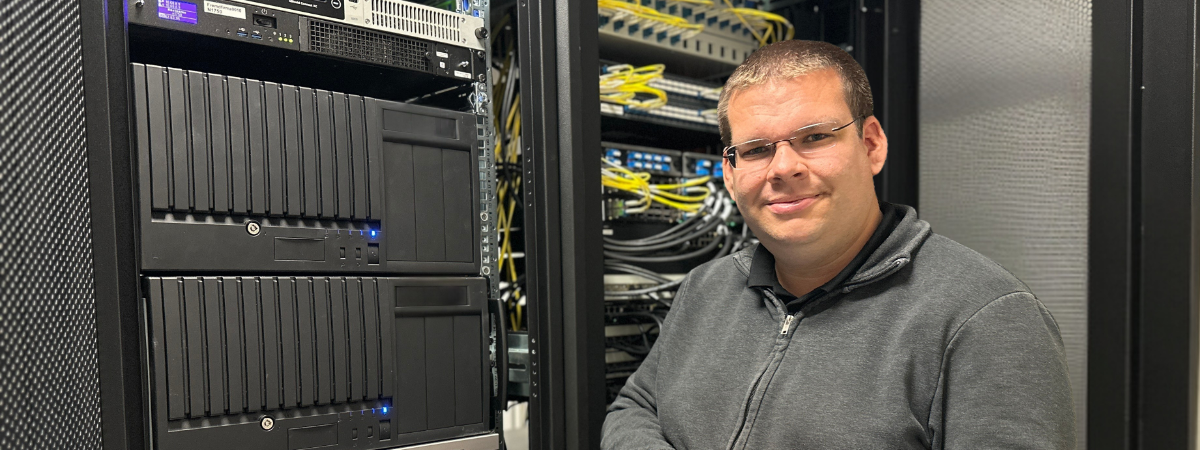
Clemens Felber, expert in AI hardware and operations at RUBICON, explains in an interview what companies should look out for, which systems are suitable for getting started, and how RUBICON supports the secure operation of AI on-premises.
Why is the topic of AI infrastructure becoming increasingly important in companies – and what does it actually mean?
Clemens: Artificial intelligence and related applications are no longer a topic for the future, but are gradually finding their way into everyday business life. For these applications to function reliably, the right technical foundation is needed: the so-called AI infrastructure. This refers to the entirety of hardware, storage, networks and software that is specifically designed to meet the requirements of AI workloads. This includes, for example, powerful processors and GPUs, but also issues such as cooling, security, monitoring and updates. So, anyone who builds a solid AI infrastructure today is laying the foundation for the stable, secure and scalable deployment of innovative AI solutions in their company. Companies also have the choice of operating their AI infrastructure in the cloud or on-premises – a decision that has implications for data security, control and flexibility.
What advantages does on-premise offer over cloud solutions for businesses?
Clemens: On-premise systems, i.e. IT systems that are operated outside the cloud and on physically controllable infrastructure, offer several advantages: Companies retain full control over their data, can ensure GDPR compliance and know exactly where and how their data is processed. Unlike many cloud services, which are flexible and quickly available, companies running their own AI operations are not dependent on external providers whose server locations and security requirements are not always known.In addition, on-premise solutions can be scaled flexibly. Companies can start small with consumer hardware and later upgrade to more powerful server hardware or AI-optimised GPUs as workloads grow or AI is to be used productively. On-premise enables more control, but also requires more planning and expertise. This is the only way to make optimal use of the hardware.
This is precisely where the RUBICON team provides support with individual consulting, implementation and operation of the AI infrastructure. Our approach is designed to ensure that systems integrate seamlessly into existing IT and run reliably in daily operations – including monitoring, updates and security management. In addition, there is the option of hosting the hardware directly at the RUBICON data centre in Vienna.
A company has decided to go with on-premises operation. Now the next question arises: What hardware should they start with? Invest directly in more powerful AI servers – or is it better to start small? What would you recommend?
Clemens: That depends heavily on the company's goals and requirements, of course. Server-based AI solutions are powerful, but they can also be very costly. If, for example, there are no clearly defined requirements or specific projects, it is difficult to dimension the hardware appropriately. This can quickly lead to bad investments. The virtualisation of GPUs can also be problematic: initial tests have shown that graphics cards that are divided between several virtual machines influence each other. This in turn can lead to performance losses and instability.
"Advantages of on-premise: Companies retain full control over their data, can ensure GDPR compliance and know exactly where and how their data is processed."
Clemens Felber
Expert in AI hardware and operations at RUBICON
Which hardware is suitable for getting started with artificial intelligence?
Clemens: Consumer hardware is recommended for companies that want to test AI or develop prototypes first. It can be used to map most common AI workloads very well – whether for model training, data analysis or prototyping. In this context, gaming graphics cards can be an affordable solution. They are easy to install in desktop PCs and offer sufficient performance for initial experiments and tests. This allows you to familiarise yourself with the technology, try out workflows, define requirements more clearly and later invest in professional infrastructure in a targeted manner once your needs are clear. This allows you to remain flexible, save costs and upgrade to more powerful server infrastructure at a later date.Which hardware is recommended for companies that want to use AI productively or implement larger projects?
Clemens: In such cases, it is recommended to use professional server hardware or GPUs that are specifically optimized for AI. These systems are designed for continuous operation, offer more memory (VRAM), higher computing power and important features such as remote management, redundant power supply and professional support. They are particularly suitable for companies that train large AI models, run several projects at the same time or want to use AI in productive environments. This ensures optimum performance, stability and scalability.
How does consumer and server hardware for AI differ, and what are the advantages and disadvantages for businesses?
Clemens: Consumer hardware – especially gaming graphics cards – differs significantly from professional server hardware in several respects. Gaming GPUs usually have a larger physical footprint and are not designed for compact installation in rack systems. They also have less VRAM, which can quickly become a limitation with very large models or data volumes.Server hardware is optimised for continuous operation, scalability and remote management, while consumer hardware is designed more for single-user solutions.
The biggest advantage of consumer hardware is the price: you get solid computing power at a fraction of the cost of professional server solutions. However, important features such as redundant power supply, hot-swap functionality and comprehensive support are missing, which can lead to longer downtimes in the event of a fault. Scalability is also limited – if you want to grow later, you will quickly reach technical and organisational limits. In addition, space requirements are higher, as consumer hardware often requires more space and individual cooling, while server hardware is tailored for efficient operation in data centres.
In short, consumer hardware is suitable for testing and smaller projects, while server hardware shows its strengths when companies want to use and scale AI productively.
In short, consumer hardware is suitable for testing and smaller projects, while server hardware shows its strengths when companies want to use and scale AI productively.
What advice would you give companies that want to use consumer hardware or gaming graphics cards for AI? Are there certain manufacturers or models that have proven particularly successful?
Clemens: If companies want to use consumer hardware or gaming graphics cards for AI applications, it is important to have a clear understanding of the respective requirements and conditions. Current models offer impressive computing power and can be a cost-effective alternative to professional data centres.
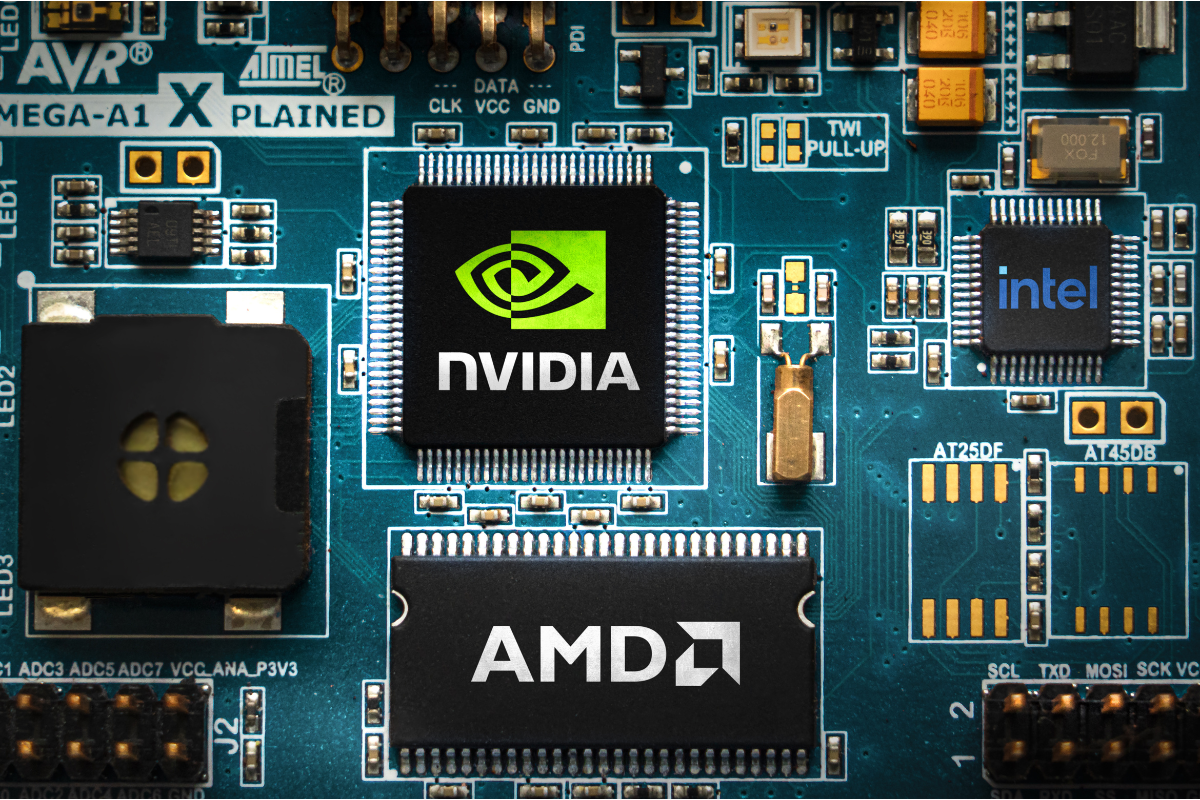
Graphics cards from Nvidia have proven themselves in many AI projects – not least because of their broad software support and established developer tools. At the same time, other manufacturers such as AMD are catching up noticeably with their RDNA 4 architecture and ROCm platform, offering interesting options, especially in terms of price-performance. Intel is also increasingly positioning itself in the AI sector with its Arc series.
It is crucial that the hardware used is not only powerful, but also scalable and maintainable in the long term. Companies should therefore rely on mature and well-documented solutions that have proven themselves in practice. This allows projects to be implemented stably and efficiently without taking unnecessary risks.
Graphics cards from Nvidia have proven themselves in many AI projects – not least because of their broad software support and established developer tools. At the same time, other manufacturers such as AMD are catching up noticeably with their RDNA 4 architecture and ROCm platform, offering interesting options, especially in terms of price-performance. Intel is also increasingly positioning itself in the AI sector with its Arc series.
It is crucial that the hardware used is not only powerful, but also scalable and maintainable in the long term. Companies should therefore rely on mature and well-documented solutions that have proven themselves in practice. This allows projects to be implemented stably and efficiently without taking unnecessary risks.
© gguy / stock.adobe.com
Where do you see the future in the field of AI infrastructure, and what advice would you give to companies planning to get started with AI hardware?
Clemens: AI is being integrated into more and more business processes. The trend is towards hybrid solutions – a combination of cloud and on-premise. At the same time, there is a growing need for standardised but flexible operating concepts. Our goal is therefore to work with our customers to adapt this approach to their individual needs and develop solutions that are precisely tailored to their requirements.My advise: Start gradually and take a pragmatic approach to getting started. In other words, it is better to start with models that require little VRAM and carry out initial prototypes or tests on consumer hardware. It is also important to keep an eye on the amount of data. RUBICON provides comprehensive support in all these areas: We advise, implement and operate secure on-premise AI infrastructures that integrate seamlessly into existing IT systems. This means that AI systems are not only launched, but also run reliably on a daily basis – including monitoring, updates and security management. Optionally, the hardware can also be hosted directly at RUBICON in Vienna. This allows companies and organisations to grow flexibly, use AI productively and retain full control over their data.
By the way: While we have focused on AI hardware here, perhaps one of my colleagues could discuss another important component, namely AI software, in a further interview. This could include a discussion of which tools and platforms support companies in productive use.