Running AI Software Securely and Efficiently in Your Company
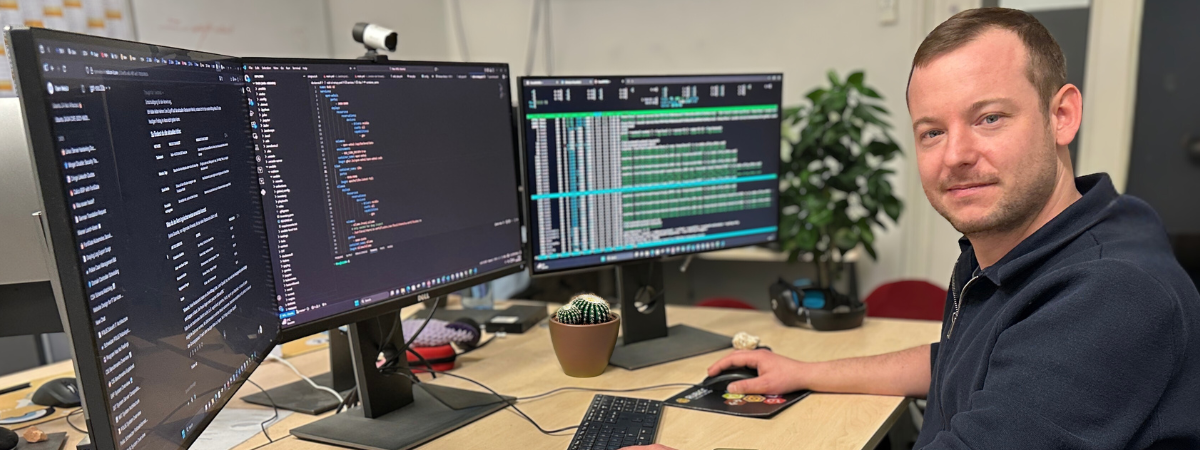
Artificial intelligence (AI) is changing the way companies make decisions, automate processes and offer innovative services. In on-premise operation, many considerations focus on models, data or hardware, but the right AI software plays an equally central role. It determines how efficiently AI projects can be implemented, scaled and run productively within the company.
Whether processes are accelerated, patterns are detected in large volumes of data, work steps are monitored or automated decisions are made, the right AI software is crucial for companies. It ensures efficiency, provides full control over data and ultimately creates significant added value. In this interview, Theo Fitzner from RUBICON explains how this added value can be realized. As an expert in AI software, he shares insights into what matters when deploying AI solutions successfully in your own operations.
Why is AI software useful for companies and what practical benefits do modern AI solutions offer?
Theo: AI software enables companies to use artificial intelligence in a targeted way within their own operations. For example, it can automate recurring processes such as orders or customer inquiries, detect patterns in large volumes of data, such as support tickets and support decisions based on those patterns. It can assist employees with complex analyses or help identify bottlenecks early by highlighting anomalies in workflows or resource usage.
With the right software, AI models can be trained in a structured way, deployed reproducibly and monitored transparently. Especially with on-premise AI, meaning operation on hardware under the company’s own control, companies retain full control over their data at all times. This ensures that AI projects don’t remain experimental but can be run stably, productively and scalably over the long term. At the same time, AI software makes the concrete benefits of AI visible within the company, for example through optimized processes, more usable data and better-informed operational decisions.

How are AI software and hardware connected?
Theo: AI software doesn’t work in isolation. It needs suitable hardware to work efficiently. Whether on a standard PC, specialized servers or in the cloud, the hardware provides the computing power (processors, graphics cards or GPUs, and memory), but it is the software that makes this power usable and enables AI models to be used productively.
The operating model also plays an important role. On-premise systems give companies complete sovereignty over their data and ensure GDPR compliance and clear security policies. Cloud solutions, on the other hand, offer rapid scaling, flexible resources and easy deployment. For AI projects to be implemented in a stable, practical and efficient way, software, hardware and operating model must be optimally aligned.
Can you give an example of how AI software and hardware work together?
Theo: Sure. A practical example is the use of an internal LLM assistant, for instance for customer service, knowledge management or IT support. An LLM (large language model) is an AI language model that understands and processes natural language. Building on this, an assistant can answer questions, provide information or support employees with their tasks.
The hardware, for example GPUs from NVIDIA or AMD, provides the computing power needed to run the language model quickly and reliably. Without this specialized hardware, requests would take considerably longer depending on their complexity: several minutes instead of seconds. The software, in turn, is what makes this computing power usable in the first place. This includes development frameworks such as CUDA (NVIDIA), ROCm (AMD) or oneAPI/OpenVINO (Intel), which enable access to the GPU, as well as model-serving software that loads the model into memory, passes all requests to it and ultimately returns the results.
On top of this come security and integration layers, which ensure that the model can be integrated into existing systems, that data access is controlled and that sensitive information is protected. These include authentication and authorization components, monitoring and logging mechanisms and interfaces that ensure the model interacts smoothly with business applications such as ticketing or ERP systems.

Reading Tip: In the interview “Data Sovereignty Through On-Premise AI Operation”, Clemens Felber, expert in AI hardware, talks about how companies can secure their data sovereignty and implement AI projects efficiently through the targeted use of AI hardware and on-premise solutions (Link).
You already mentioned security and integration layers. What typical challenges can arise when integrating AI software into existing IT systems?
Theo: As I mentioned, AI models don’t work in isolation. They often need to be integrated into existing ERP, CRM or data management systems. This requires clear interfaces and access concepts, data has to be brought into a format the model understands, and of course all security requirements must be met.
My tip: Bring IT on board early and check together: Does the AI software fit our systems? Can we integrate it cleanly? What adjustments do we need? This coordination saves time and money while avoiding problems later on.
What types of AI software and solutions are available and how do they differ - also in terms of on-premises and cloud deployment?
Theo: I would say AI software can basically be divided into three main categories:
1. Platforms for Production Use (Machine Learning Operations - MLOps) and Deployment: These tools help move models into production systems in a stable, reproducible and scalable way, automate updates and monitor the entire lifecycle. They are particularly suitable for teams that want to run several projects in parallel. However, setup is more complex, some onboarding may be required and paid platforms can be expensive depending on scope.
2. Specialized Tools and Applications: These include tools for text, images, analytics or automated workflows. Many of them now use so-called AI agents, which can plan and execute tasks independently. They enable a quick start with concrete use cases and reduce development effort, since ready-to-use workflows are available immediately. However, they offer less flexibility when it comes to customization or unusual requirements.
3. Development Frameworks: My colleagues in RUBICON’s development team could certainly tell you a lot about how these frameworks are used day to day. It would definitely be interesting to interview them about it sometime. But in short: companies that want to use GPU power according to their own specifications benefit from the flexibility of these frameworks. At the same time, they also require in-house expertise to be used productively.
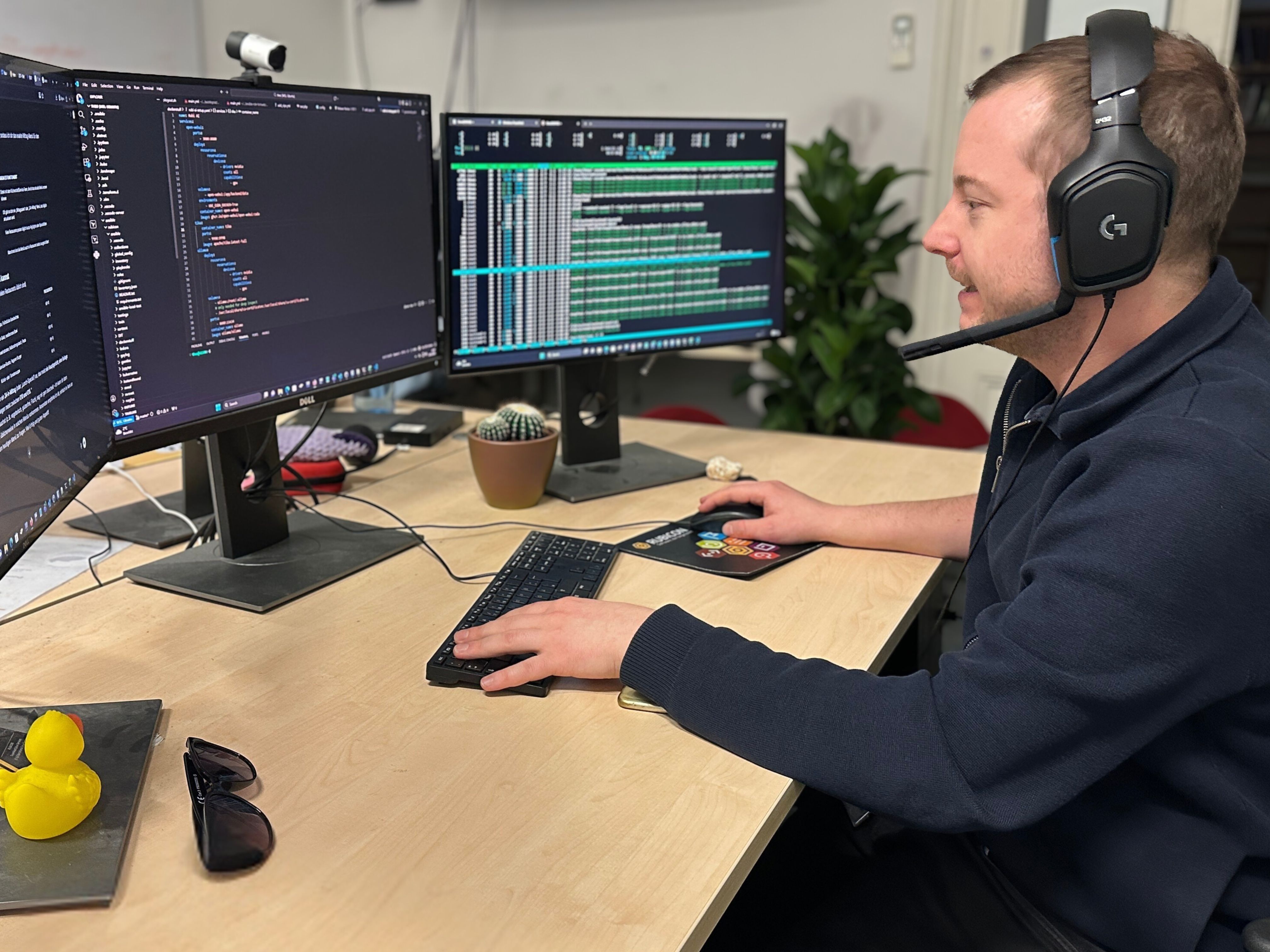
AI software is generally flexible and can be operated on premise, in the cloud or in hybrid scenarios. MLOps platforms also offer different operating models depending on the provider. Specialized tools and applications, on the other hand, are often cloud-based, although local use may be possible with open-source solutions. Which operating model makes sense depends on the company’s priorities: those who place particular value on data sovereignty and security tend to choose a locally operated solution. Those who prioritize flexibility, rapid scalability and easy access are more likely to opt for cloud solutions. In that case, however, data protection aspects must be taken into account, since the data is usually uploaded to the cloud.
Regardless of the specific area of application, the RUBICON team can support companies above all in operating AI software and the infrastructure it requires. The focus is on making AI systems stable, secure and sustainable to operate over the long term, from providing suitable environments to ongoing operations. My colleagues and I make sure that hardware and software work together reliably, systems remain scalable and security and compliance requirements are met. We rely on ISO-certified data centers in Europe, laying the foundation for the highest security standards and full protection of data sovereignty. This allows companies to use their AI solutions under real-world conditions and develop them step by step.
Open-source solution or commercial platform: what should companies look for when choosing their AI software?
Theo: In general, both approaches work very well, but they have different requirements and advantages. Open-source solutions such as Open WebUI, Ollama or vLLM are especially recommended when companies are technically strong, have a team that can operate and further develop frameworks, platforms or tools themselves, need flexibility and want to remain independent of individual vendors. Open source is also often more cost-effective, very transparent and constantly evolving thanks to large communities. It’s a good basis for innovation or initial pilot projects. These solutions can usually be operated on premise, but depending on the software can also be used in the cloud.
Commercial platforms, for example from OpenAI, Google or Anthropic, are in turn recommended for companies that want to achieve productive results quickly or conserve internal resources. They often offer a higher degree of automation and integrated workflows. These platforms are usually cloud-based and local use within your own operations is generally only possible to a limited extent or not at all. As already mentioned, this also raises the question of data protection, since data is usually transmitted to these systems, which can be viewed critically, especially when sensitive information is involved.
Internally, for example, we use an on-premise AI chatbot, comparable to ChatGPT, that works with integrated knowledge bases. This makes relevant information available quickly, in context and easily accessible to all employees.
„My recommendation: If a company brings a willingness to experiment, technical know-how and sufficient manpower, open source can be a good way to go: flexible, transparent and highly scalable. However, if lower operational effort is the priority, a commercial platform may be the better choice.“
Theo Fitzner
AI Software Expert at RUBICON
What trends are you currently observing in AI in companies, particularly in AI solutions, hybrid platforms and on-premise AI?
Theo: Companies today are no longer just thinking about whether to use AI, but about how they can operate it professionally over the long term. One important trend is the growing demand for flexible, hybrid platforms. Many want to take advantage of the cloud while retaining control over sensitive data and complementing their systems on premise. This is exactly where RUBICON can help: with European data centers operated in Austria and ISO-certified, we ensure that companies and organizations retain full data sovereignty and can run AI systems under the highest security standards.
Conclusion
Anyone who wants to use artificial intelligence successfully needs more than just the right models and data. The right software, a well-thought-out infrastructure, clear processes and data protection must also be taken into account. Beyond technical performance, it’s about selecting and designing AI solutions so that they fit existing system landscapes, security requirements and organizational frameworks. Companies and organizations should therefore carefully assess which tools and platforms best support their specific use cases and how these can be operated and developed sustainably. This is how technological innovation becomes real added value in day-to-day operations.
Are you planning to get started with AI or would you like to run your existing AI applications productively and efficiently?
Contact the experts at RUBICON for individual advice. You can reach us by phone +43 1 533 25 55-0 , by email office@rubicon.eu or via the form below. We look forward to hearing from you!